Red Light Therapy Under 200 Dollars: What to Expect at That Price
Published October 2026. Updated November 2026.
Quick answer
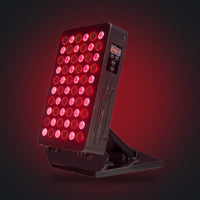
Under $200 you can buy a compact device, not a large one. On AWA, that means the 3 in 1 torch ($84.99), the belt ($119.99), the HL300 sauna blanket ($179.99) and, on the day we checked, the FX300 panel ($199.99). Expect a smaller coverage area, a corded or simple design and a short list of extras. Check irradiance at a stated distance, wavelengths, the box contents and the return terms before you compare anything else. Prices were as listed on November 19, 2026 and can change.
What a budget under $200 buys
The number is easy to say and hard to compare, because at this price you are choosing between different formats, not different versions of one thing. Here is what sits under $200 on AWA, from the product pages.
| Device | Price (Nov 19, 2026) | Format | Power | Session guidance on the page |
|---|---|---|---|---|
| AWA 3 in 1 torch | $84.99 | Handheld, red, near infrared and blue modes | Rechargeable | A few minutes directly on the area, as needed |
| AWA belt | $119.99 | Wearable belt, 105 LEDs, vibration setting | USB or wall adapter | 10 to 15 minutes |
| AWA HL300 | $179.99 | Infrared sauna blanket (heat product, 70 by 31 inches) | 110V, remote controlled | Timer from 5 to 60 minutes |
| AWA FX300 | $199.99 | Hanging panel | Corded, AC 100 to 240V | 10 to 15 minutes, about 6 to 12 inches from the area |
Prices and session text come from the product pages on November 19, 2026. Check the live page before you buy.
The HL300 is a far infrared heat blanket, not a light panel, so it belongs to a different comparison. Compare it with other heat products, not with panels. The rest of this guide is about light devices.
What to expect at this price
These are general patterns, not promises about any one product. Use them to set your expectations when you read a listing.
- Smaller coverage. A compact panel or handheld lights one area at a time. If you want several areas in one go, you will need more positions.
- Simple power. Many devices at this price are corded or rechargeable with a single mode. That is fine. It just means fewer controls.
- A short box. Check the contents. Goggles, a hanging kit or a remote may or may not be included. The FX300 box lists a power cord, door hook, goggles, hanging kit and a 2m adjustable rope.
- Fewer proofs in the listing. Lower priced listings often skip irradiance at a distance, which is the number you most need. If it is missing, ask the seller.
- Support terms matter more. With a smaller budget, a clear return window and a plain warranty are worth more than a longer feature list.
The numbers to find before you compare prices
- Irradiance in mW/cm² at a stated distance. AWA publishes these for the FX300 and FX500. The FX300 is stated at 83.5 mW/cm² at 6 inches and 43.3 at 12 inches. If a listing gives only total watts, you cannot calculate a dose. See the irradiance guide.
- Wavelengths. Look for stated nanometer values, such as 660nm and 850nm, so you know what the LEDs emit. See the wavelength guide.
- Size and weight. Check dimensions against the space you have.
- Power source and cord. Corded, USB or rechargeable changes where you can use it.
- What is in the box. Goggles and mounting parts are part of the real price.
- Return window and warranty terms. Read them before checkout, not after.
A worked cost example
Price per session is a fair way to compare a low cost device with a pricier one. The prices below are real (November 19, 2026). The schedule is an assumption, so the usage figures are example numbers for arithmetic only.
| Device | Price | Example use | Sessions | Cost per session |
|---|---|---|---|---|
| AWA 3 in 1 torch | $84.99 | 2 sessions a week for 1 year | 104 | $0.82 |
| AWA belt | $119.99 | 3 sessions a week for 1 year | 156 | $0.77 |
| AWA FX300 | $199.99 | 3 sessions a week for 1 year | 156 | $1.28 |
| AWA FX300 | $199.99 | 3 sessions a week for 2 years | 312 | $0.64 |
Purchase price only. It leaves out electricity, which is small for a device like this. See our separate guide on electricity for the arithmetic.
The point of the table is the shape, not the numbers. Cost per session falls the longer you keep using the device. A cheaper device you stop using costs more per session than a pricier one you keep using.
Red flags on very cheap listings
- No irradiance figure, or one with no distance attached.
- A large total watt number and no mention of mW/cm².
- Promises of guaranteed outcomes. Light devices sold as general wellness products should not make those claims.
- No manual, no return terms and no support contact on the page.
- Vague LED counts and a stock photo that does not match the product.
- Reviews that all read alike and mention nothing about the device itself.
The short version: if a listing sounds too good, ask for the spec in writing.
A one minute scorecard
Give a listing one point for each yes. Under 4 out of 6, keep looking.
- Irradiance is stated with a distance.
- Wavelengths are stated in nanometers.
- Dimensions and weight are given.
- The box contents are listed.
- The return window and warranty are easy to find.
- The page makes no health outcome claims.
Common mistakes
- Choosing on price alone and skipping the irradiance number.
- Comparing a heat blanket with a light panel as if they were the same product type.
- Forgetting what the box includes, then paying extra for goggles or a hanging kit.
- Counting on a sale price that has since changed. Check the live page.
- Ignoring the return window. It is the cheapest protection you have.
- Buying a larger device than your space allows to save on cost per area.
Before you use any light device: read the label, follow the device manual, and use eye protection as directed. If you have any medical question, speak to a qualified professional first.
Related guides in this series
- Red light therapy buyers checklist for home use
- Why cheap panels can lose output over time
- What red light therapy costs in 2026
- What irradiance means on a spec sheet
- 660nm and 850nm wavelengths
Device pages
Read the full page and label for each device before you use it: AWA FX300 panel, AWA 3 in 1 torch, AWA belt. You can also browse all AWA red light therapy devices.
Frequently asked questions
Can you get a good red light device for under $200?
You can buy a compact device that states its specs clearly. Judge it on irradiance at a stated distance, wavelengths, box contents and return terms, not on price alone.
Which AWA devices cost under $200?
On November 19, 2026, the 3 in 1 torch ($84.99), the belt ($119.99), the HL300 sauna blanket ($179.99) and the FX300 panel ($199.99). Prices can change, so check the product pages.
What should I give up first at this price?
Coverage and extras. Expect a smaller lit area and a shorter box list rather than weaker specs. Never give up the return terms.
Is a cheaper panel just a smaller panel?
Often it is smaller, but not always. Compare irradiance at the same distance. Size and price alone do not tell you how much light reaches each square centimeter.
How do I compare a heat blanket with a light panel?
Do not compare them on irradiance. A heat blanket is a far infrared heat product with its own timer and temperature settings, so compare it with other heat products.
Sources
- FDA: General Wellness, Policy for Low Risk Devices. Final guidance dated January 2026 explaining how the agency applies its compliance policy to low risk products that support a healthy lifestyle. It is a policy document, not a statement about any one device.
- FDA: Laser Products and Instruments. States that LEDs are different from laser diodes and are not subject to the federal laser product performance standard. Helpful when a listing mixes terms.
Regulatory note: select devices carry FDA 510(k) clearance for specific, limited uses; most are sold as general wellness products. Read each product page and label.
How we create this guide
AWA sells red light therapy devices. We write these guides to explain how devices work and how to choose and use one. This is general information, not medical advice. Read each product page and label. See our editorial standards.