Electrical Safety for Red Light Panels: Outlets, Cords and Surge Protection
Published October 2026. Updated October 2026.
Quick answer
Plug a panel straight into a wall outlet that is in good shape, away from water, and keep the cord uncoiled and out of walkways. If you must use a power strip or extension cord, choose one in good shape, rated for at least the load, and do not share it with a heater or other high draw appliance. A surge protector adds protection for electronics but does not replace a good outlet.
The short version of home electrical safety
A light panel is a modest electrical load. The FX300 page lists an actual power draw of about 84 watts and the FX500 page lists about 85 watts at 110 volts, with universal 100 to 240 volt input. That is far less than a space heater or a hair dryer. Most electrical trouble with devices like this comes not from the panel but from how it is plugged in: a loose outlet, a coiled cord, a crowded strip, or a cord run under a rug.
This page is general guidance. It does not replace your manual, local electrical codes, or a licensed electrician. If something in your wiring looks wrong, call an electrician.
Choose the outlet first
The best place to plug in is a wall outlet that:
- Holds the plug firmly, with no wobble.
- Has no cracks, scorch marks, discoloration or buzzing.
- Is not warm to the touch after use.
- Is on a circuit that is not also running heavy appliances.
- Is away from sinks, tubs and showers, and anywhere water could reach the plug.
If an outlet fails any of these, use another one and have the first one looked at.
Cord rules
- Keep the cord fully uncoiled while the panel runs. A coiled cord holds heat.
- Do not run the cord under rugs or carpet, where wear and heat go unnoticed.
- Do not pinch it in a door, drawer or the leg of a stand.
- Do not pull on the cord to unplug. Hold the plug.
- Keep it out of walkways so nobody trips and drags the panel.
- If the cord is damaged, stop using the device. Do not tape or repair it.
OSHA lists improper use of extension and flexible cords among the most frequent causes of electrical injuries. The page is aimed at workplaces, but the same habits apply at home.
Power strips and extension cords
Wall outlet first, always. If that is truly not possible:
- Pick a short extension cord rather than a long one.
- Use a cord or strip in good shape, with a cord thick enough for the load and a rating at or above what you plug in.
- Never daisy chain, which means plugging one strip or cord into another.
- Do not share the strip with a space heater, hair dryer, kettle or other high draw appliance.
- Uncoil it fully and leave it where air can reach it.
Load check with example numbers
Here is how to check load yourself. The rule is amps = watts divided by volts. The panel figures are the actual draw listed on our product pages. The other rows are example numbers for arithmetic only, so check the label on your own appliances.
| Item | Watts | Volts | Amps (watts divided by volts) |
|---|---|---|---|
| FX300 panel (listed actual draw) | 84 | 110 | about 0.8 |
| FX500 panel (listed actual draw) | 85 | 110 | about 0.8 |
| Example space heater | 1,500 | 120 | 12.5 |
| Example hair dryer | 1,800 | 120 | 15.0 |
| Example circuit rating (common household) | n/a | 120 | 15 amps |
Example numbers for arithmetic only, except the panel rows.
The point of the table: a panel on its own is a small load, but a circuit that also runs a heater can approach its limit quickly. A common rule of thumb is not to plan on using a circuit's full rating for loads that run a long time. Your electrician can tell you what applies where you live.
Surge protectors
A surge protector is a power strip with a part that is meant to absorb brief voltage spikes. It can add a layer of protection for electronics, including a panel with a built in timer. Things to know:
- It is not a substitute for a sound outlet or a sound cord.
- Protection parts wear out over time. A strip with a status light that has gone off may no longer protect.
- Buy one with a safety testing mark from a recognized laboratory and a clear rating on the label.
- Replace it after a big surge or if the housing feels hot, smells or looks damaged.
Moving the panel
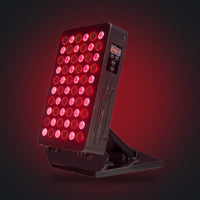
Unplug before you move the panel, and look at the plug and cord while you do. Our FX500 is a foldable stand panel, and the FX300 hangs from a hook. For either one, make sure the cord has slack and cannot be pulled tight by the hook, the stand or a door.
If something goes wrong
Stop using the device. Unplug it if it is safe to reach the plug. Contact us through the contact page. The FDA also explains how consumers can report a device problem through MedWatch.
Common mistakes
- Coiling the cord on the floor while the panel runs.
- Plugging the panel into a strip with a heater on the same strip.
- Chaining one extension cord to another.
- Running the cord under a rug.
- Using a loose or scorched outlet because it still works.
- Pulling the plug out by the cord.
- Relying on a surge protector with a dead status light.
Before you use any light device: read the label, follow the device manual, and use eye protection as directed. Speak to a qualified professional before use if you have any medical question, take medications, are pregnant, or have light sensitivity.
Related guides in this series
- The full safety guide
- Why cheap panels lose power over time
- AWA FX300 review
- AWA FX500 review
- A buyer's checklist for home devices
Device pages
Read the full page and label for each device before you use it: AWA FX300 panel, AWA FX500 panel. You can also browse AWA panels.
Frequently asked questions
Can I plug a red light panel into a power strip?
A wall outlet is better. If you need a strip, use one in good shape with a suitable rating, and do not share it with high draw appliances.
Do I need a surge protector for a panel?
It is optional. It can add a layer of protection for electronics, but it does not replace a good outlet and cord.
How much power does a panel use?
Our product pages list an actual draw of about 84 watts for the FX300 and 85 watts for the FX500 at 110 volts.
Can I use an extension cord?
Only if you cannot reach a wall outlet. Keep it short, fully uncoiled, rated for the load and never chained.
What if the plug feels warm?
Stop using it, unplug it and let it cool. Try a different outlet and contact support if the plug stays warm.
Sources
- OSHA: Electrical safety overview. A workplace page that lists improper use of extension and flexible cords among the most frequent causes of electrical injuries. We cite it for general electrical practice, not for any home product.
- FDA: How to report a medical device problem. Explains that consumers can report a device problem through MedWatch, the FDA voluntary safety reporting program, online or by mail or fax.
Regulatory note: select devices carry FDA 510(k) clearance for specific, limited uses; most are sold as general wellness products. Read each product page and label.
How we create this guide
AWA sells red light therapy devices. We write these guides to explain how devices work and how to choose, use and look after one. This is general information, not medical advice. Read each product page and label. See our editorial standards.