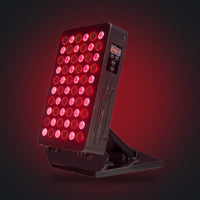
Red Light Therapy for the Lower Body: Panels, Slippers and Belts Compared
Quick answer: For lower body use, panels cover the most area from a distance, slippers are the simplest option for feet, and belts wrap around the hips and legs. Choose by area, space and how long you want to stay still.
The lower body is a large area, so format matters. This guide compares three AWA formats on practical points, without making health claims.
Format comparison
| Format | Coverage | Setup | Best for |
|---|---|---|---|
| Panel (FX300, FX500) | Large area at a set distance | Stand, door mount or wall | Sessions where you can stand or sit in front of it |
| Slippers | Feet | Put on and sit | Seated sessions at home |
| Belt | Waist, hips, upper legs | Wrap and fasten | People who prefer a wearable |
How distance changes the numbers
Light intensity falls as you move away from a panel. Our irradiance specs post lists measured values at each distance so you can plan placement.
Wavelengths on the spec sheet
Red and near infrared are the usual wavelengths. Our 660nm vs 850nm guide explains what each term means.
Common mistakes
- Choosing a panel when you have no wall or door space to mount it.
- Comparing devices without checking the distance used for the quoted power.
- Wearing a belt for longer than the manual states.
- Skipping the setup steps in the manual.
Frequently asked questions
Which format is easiest to start with?
Slippers and belts need the least setup. Panels need a place to stand or mount.
Can I combine formats?
Yes, as separate sessions, following each manual.
Where do I compare panels?
See FX300 vs FX500.
Browse the red light therapy collection. This guide is educational and is not intended to diagnose or replace clinician advice.
How we create this guide: We write from product specs and manuals and review each claim against our editorial standards.
Updated October 2026.